Saturday, September 25, 2010

The Existence of Non-Existent Phantom Breasts


Breasts, rectum and teeth - - these are body parts which, apart from our limbs, we can do without. Imagine you lost one of these parts (God forbid). The next concern, then, would be the implications of living without them. As highly adaptive creatures, would we easily adjust to this kind of situation? How do we expect our bodies to compensate for this “loss”? What aftereffects would physiological rearrangement (if any) have in our personality and well-being?

Perception researchers coined the term phantom phenomena to refer to the experiences individuals have when they feel pain and other sensations from their amputated body parts (Goldstein, 2007; Björkmana, Arnéra , Lundb, & Hydén, 2010). Amputees, for example, experience considerable suffering as they try to step off a bed using their phantom feet or legs or lift a cup with a phantom hand (Goldstein, 2007). I highly suggest that you watch the sixth season, fourth episode of House M.D. entitled “The Tyrant” to get a clearer grasp for this phenomena. This condition is believed to not only prevail in amputated limbs but in other parts as well (refer to the opening sentence). Whether we lose a loved one or limb, our brain has its way of reminding us that we’ve lost “it”. Signals from the brain are transmitted to the remaining limb which inflicts stump pain on amputees (Goldstein, 2007; Björkmana, Arnéra , Lundb, & Hydén, 2010).

My aunt once mentioned the dominance of breast cancer in our lineage - quite alarming how it hasn’t skipped a generation. So, as a future candidate of mastectomy (breast removal), it became of interest for me to investigate the relevance of phantom limbs with phantom breasts. Prior to this I’ve never heard about it. To everyone who is reading this (women most especially), I hope this enlightens you as well.

Phantom breast (PB) is the specific term used to describe the experience of the continued presence of the breast after mastectomy: feeling sensations of pain, experience of size, shape and weight of normal breast, itching and pinpricks (Dijkstra, Rietman, & Geertzen, 2007; Spyropoulou, Markopoulos, Zervas, Christodoulou & Papageorgiou 2009). Some studies have suggested decreasing PB sensations over time while others report experiencing it for the first time between their 6th to 24th month follow-up (Dijkstra, Rietman, & Geertzen, 2007). Based on the symptoms, it seems like PB and Phantom Limb are very similar. Does this also hold true with the level of pain experienced by individuals? Statistically, women who experience phantom breasts usually comprise less than half of the participants in studies; and, unlike the prevalence of phantom pain in limb amputees, breast amputees have reported to experience minimal pain (Dijkstra, Rietman, & Geertzen, 2007; Spyropoulou et al, 2009). Compared to phantom limb, life with phantom breast doesn’t seem to be distressing. With the way I see it, mastectomized women can move on with their lives unless vanity takes the best of them. Physiologically, this difference may be explained by the cortical representation of limbs and breast in the brain’s primary sensorimotor cortex – limb perception relies on more sensory modalities (proprioception and joint sensibility) as well as represented in a larger area than the breast (Dijkstra, Rietman, & Geertzen, 2007). This finding, combined with the technological advances (less extensive surgery) in mastectomy largely contribute to the indifference of individuals with PB.

Perception of pain can increase if one focuses on it and vice versa (Goldstein, 2007). Would you, for example, be more honest in reporting PB sensation and pain when given a questionnaire or verbally interviewed by a therapist? Assessment methods (questionnaires, cross-sectional studies) and period (assessed during psychological treatment or home visit) have been observed to cause variations between individuals’ perceptions on PB sensation and pain. Questionnaires and cross-sectional studies overestimated the prevalence of both PB sensation and pain than prospective studies (Dijkstra, Rietman, & Geertzen, 2007). Clearly there have been efforts to assess these PB individuals; however, with the unavailability of standardized methods and biases in reporting PB sensation and pain, validity and reliability are weak.

Lastly, I’d like to point out two more factors that have also been looked into: age and control. You’d probably agree with the fact that we like to have control over our lives. Some women agonize over the thought that there was something in their bodies that was out of control after losing their breasts (Björkmana, Arnéra, Lundb, & Hydén, 2010). They fear that this unending experience might overpower them and trigger recurrent pain. For the older age groups, most especially, the loss of a bodily function made them sad, dependent and more anxious about the future (Björkmana, Arnéra , Lundb, & Hydén, 2010; Dijkstra, Rietman, & Geertzen, 2007). This was when the scene in How I Met Your Mother (Marshall and Ted were discussing about losing something/someone) resurfaced in my memory:

“Marshall: Look, I understand that you guys had to break up eventually, but why today?

Ted: She’s leaving tomorrow.

Marshall: Yeah, but she’s still in town. So you spend one more amazing day together. Ted, think of it this way. If you knew that you were going to lose your leg tomorrow, would you sit on the couch and cry about it, or would you run and jump and do some awesome air kicks while you still could?”
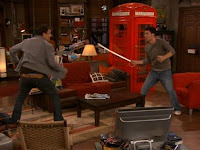
How I Met Your Mother, Season 1 Episode 16

References:

Björkmana, B., Arnéra , S., Lundb, I. & Hydén, L. (2010). Adult limb and breast amputees’ experience and descriptions of phantom phenomena—A qualitative study. Scandinavian Journal of Pain, 1, 43–49. doi:10.1016/j.sjpain.2009.09.001

Dijkstra, P., Rietman , J. & Geertzen, J. (2007). Phantom breast sensations and phantom breast pain: A 2-year prospective study and a methodological analysis of literature. European Journal of Pain, 11, 99–108. doi:10.1016/j.ejpain.2006.01.002

Goldstein, E. B. (2007). Sensation and Perception (7th Eds.). Belmont, CA: Wadsworth

Spyropoulou, A., Markopoulos, C., Zervas, I., Christodoulou, G. & Papageorgiou, C. (2009). Phenomenological Study of Phantom Breast Syndrome. Maturitas, 63, S52.

Friday, September 24, 2010

Ang Sarili sa Ibang Tao

by Dianne Cuyugan

Noong nasa elementary at high school pa ako, karaniwan sa isang autograph, ganito ang makikita mo:

Describe yourself: Judge me 
Nakakatawa di ba? Kasi alam kong ganyan din ang sinulat mo noon, at di mapagkakaila na ginawa ko rin iyon. Tama naman di ba? Kasi nga naman, ang mga kaibigan natin ang higit na nakakakilala sa atin – sa ugali, pag-iisip at ugali natin. Natutulungang mabuo ang pagkatao ng isang indibidwal sa pamamagitan ng mga kaibigan, magulang, pamilya at kung sino pang maiisip mong malapit sa buhay mo. Eh, kung tatanungin kita, maaari ba ang isagot mo sa autograph ay ganito:

Describe yourself: THEN, I’LL DESCRIBE YOU! O_O
Naisip mo na ba kung paano at kung pwede bang mangyari ito? Ayon sa isang pag-aaral nila Woods, Harms at Vazire (2010), pwedeng-pwedeng mangyari ito. Paano di ba? Natuklasan nila ang tinatawag na perceiver effect kung saan maaari itong maging personality projective test. Ang perceiver effect ay nailalarawan mo ang sarili mo o kung paano mo nakikita ang sarili mo sa pamamagitan ng paglalarawan mo sa ibang tao. Hindi man halata at alam sa sarili mo pero ganito ang paraan ng pag-iisip ng utak mo.
Maaaring isa ito sa mga dahilan kung bakit maraming bagay tayong nakikita na kapareho natin sa ibang tao. Nakakatawa lang isipin kasi parang ganito lang iyan: “Naging magkaibigan tayo dahil nakita ko ang sarili ko sa iyo nang ilarawan kita.” Kung iisipin, maaaring ganito nga ang pagkakaibigan, tulad ng sabi nila “Birds of the same feather flock together.”
Isa pang naisip ko, ganito ba ka-self-centered ang tao – sarili pa rin ang nakikita sa katauhan ibang tao? Ano sa tingin mo?

Reference: Wood, D., Harms, P., & Vazire, S. (2010). Perceiver effects as projective tests: What your perceptions of others say about you. Journal of Personality and Social Psychology, 99(1), 174-190. doi:10.1037/a0019390.

Thursday, September 23, 2010

(at)
I’m not the kind to watch a movie in the cinema just because everybody is talking about it. I actually avoid watching the movie for fear of being biased, with my expectations extremely high because of all the recommendations. Imagine my disappointment when I watched Transformers –am not much of an action/CGI fan either (yes, we know you can do it, Hollywood). And no, I still haven’t watched Inception and the plan is to wait around one more year when people have forgotten about it.


However, I did watch Avatar in IMAX. Hypocrite? You can consider that. Fact is, I don’t have the money to buy my own 3D projector, nor the time to make my own 3D glasses. Plus it was my first time in IMAX. Yes, I found it worth the 3D package. No, the story was nothing new, Pocahontas.


So, about 3D motion perception: a study suggests that the recent models of binocular 3D motion perception may not actually reflect the strategies we, as observers, use (Harris and Drga, 2005).


The left and right eye see two different things. This is called binocular disparity. Perceiving depth because of binocular disparity is called stereopsis. Ordinary cameras cannot do this. A special device, however, was introduced by Charles Wheatstone . This device, called a stereoscope, is capable of capturing what the left and the right eyes can see in two different images. The same thing goes on with 3D movies –the “blurred” images are actually two images, and the glasses filter out the other image using colors (Goldstein, 2010).

Direction estimation based on binocular disparity and motion signals in binocular 3D motion has been studied well enough. We can see the results of these studies on the big screen and now almost everywhere around us. However, Harris & Drga (2005) have shown that observers may use neither binocular disparity nor motion signals to obtain the angle of 3D motion for small trajectory angles close to the nose.

In their research, they tested if observers make an estimate of the visual direction of an object at the start and end of its motion and if they use that estimate to determine how the object has moved. The experiment required observers to view a small point-like object moving along a 3D trajectory. They were then asked to move a wooden pointer to reproduce the perceived 3D motion direction of the target.

It was found that they use an estimate of visual direction to set a perceived angle instead of estimates of distances moved in depth, showing the importance of visual direction for perception and control of action. Visual direction is the “angle between where an object of interest is and where the observer is facing” (Harris & Drga, 2005). Of course, in the natural setting, visual direction is not the only way we determine motion.

Imagine this. You are looking at a floating ball that is right in front of you. The floor is just plain white, with no texture gradient whatsoever that can help you determine distance (see this entry for texture gradients). This floating ball moves towards you but not in a straight line. Harris & Drga (2005) suggest that you will estimate the distance of movement the ball made based on the angle between the ball and where you are facing, and not how near the ball is to you.

References
Goldstein, E. B. (2010). Sensation and Perception (8th ed.). Belmont, CA, USA: Wadsworth Publishing.
Harris, J. M., & Drga, V. F. (2005). Using visual direction in three-dimensional motion perception. Nature Neuroscience , 8 (2).

Saturday, September 18, 2010


Recently, I came across these designs by Heike Weber. And while they may already be astounding just the way they are, I was even more amazed when I read the description of the images (which I usually don’t do), and I found that they’re drawn with permanent markers –crazy brilliant, yes. I wonder, though, who wouldn’t go crazy when living in a house decorated like this? Perhaps perception psychology people –possibly.

So how did this artist, and many others, create the illusion of seemingly alien species sticking out of walls, or the whirlpool in the middle of the room? Texture gradients. Texture gradient is the pattern of the surface we see. This pattern seems more compact when it is further away, than when it is near.


In this picture, we see a regular tiled floor. The lines marking the tiles at the end of the room seem to be closer to each other than those that are near us, even though we know that the tiles are all the same size of square. The same principle is applied in the artwork below.


Here we have another example of using texture gradient to
create an illusion of distance. The “mountains” that seem
farther have lines drawn closer to each other than those that seem nearer.Another factor we see here is occlusion, where an object covers another object, making the covering object seem nearer than the covered. This is easily observed in real life. Let’s say there’s a mango in front of you, and I put an apple in front of you, covering the mango. You would probably say that the apple is closer to you than the mango. The same thing goes here: the “mountains” that are nearer partially cover the “mountains” that are farther.

In the same picture, we can see another cue for determining the “mountains’” relative distance: relative height. The “mountains” that seem farther have their bases higher than the “mountains” that seem nearer. If you look at the wall as just a plain, flat wall, the foot (or feet?) of some of the “mountains” (those that seem farther away) are above other “mou
ntains” (those that seem closer).


Using these cues, we can create illusions, making the room seem bigger or smaller than it actually is. Let’s take a look at the television in the picture below.We can see that it seems very distant, and we have texture gradient to thank for that. But this is not the only factor affecting how we perceive the television’s distance. Notice how the photographer loves capturing the ground and not the ceiling. It’s probably because it’s easier to take photographs from the floor, but it could also be possibly because the ground plays a huge part in perceiving distance.


A long, long time ago, a man called Alhazen said that there has to be an array of “ordered, continuous” bodies between the object and the viewer’s eyes in order for him to accurately perceive the distance between him and that object (as cited in Bien, Braunstein, and Andersen, 2006). In the pictures above, the floor is our “ordered, contiuous” body. It has been found that even when given a ceiling, people still preferred to make judgments of distance according to the ground -or the floor (Bien, Braunstein, & Andersen, 2006). The scientists who found out about this referred to the phenomenon as the ground dominance effect. They also found that when there were two side walls, instead of the ceiling and the floor, people did not prefer either wall over the other, emphasizing more the role of the ground in our perceiving distance.


So what could be the explanation for this ground dominance effect? Another scientist named Gibson, suggested more than 50 years ago that the ground is universal, and that it supports most of the objects in the environment, as well as the movement of animals (as cited in Bien, Braunstein, & Andersen, 2006). This means that because the ground is everywhere (unless perhaps you are in outer space), we have adapted to using it as basis for judging distance, as opposed to the ceiling –which is, of course not everywhere (have you tried using the sky?). when the information given by the ceiling and the ground oppose each other, people would still use the ground as basis.

References:

Bien, Z., Braunstein, M. L., & Andersen, G. J. (2006). The ground dominance effect in the perception of relative distance in 3-D scenes is mainly due to characteristics of the ground surface. Perception & psychophysics , 68 (8), 1297-1309.

Goldstein, E. B. (2007). Sensation and Perception (7th Eds.).

Belmont, CA: Wadsworth.
Heike Weber bumbumbum

-At

Ohhhhh SNAP! Hypnotized by Virtual Reality

Fix your gaze upon the image of the eyes. You are getting sleepy. . .you are getting sleepy. Now, the next time you come across the word “SNAP” in this article, you will think of five things or places that get you hypnotized. . .

SNAP!

Thank you for bearing with my mediocre attempt to get you into a hypnotic trance. Despite this failure, care to share what’s in your top 5 list? Based on personal experience and observation, I’d think alcohol, killer smiles, daydreams, drama series and computer/game console games are enough to get you hypnotized. Don’t you just love (and hate) the feeling when you get so engrossed, for example, by the scenes in your favorite drama series that you forget to carry out your daily functions (like eat, study and shower)? At that point in time, your current emotions (e.g. depression from failing an exam) get overshadowed by the romantic confessions, heart stopping sorrows, and jaw dropping twists of the drama. Sometimes, especially in times of trouble, they have the power to lure you in a surreal dimension in which pain is non-existent. You become this hopeless romantic who someday wants to experience a parallel dating script. And then, as soon as the credits role, the inequality, stresses and pain of real life bring you back to consciousness. Oh SNAP.

Everyone wants to live a Hakuna Matata life, agreed? Isn’t that the reason why some people contemplate on suicide or drown in drugs when pain (physical, emotional, etc.) becomes unbearable? Well, apart from applying stereoscopy (adding depth to 2D objects, making them appear 3D) in game consoles, amusement park attractions and movies, I’ve come to discover how it has been used to alleviate pain in individuals with disabilities.

Virtual or augmented reality environments have the potential to provide leisure activities for children, young adults and adults with physical and intellectual disabilities (Mott, Bucolo, Cuttle, Mill, Hilder, Miller & Kimble, 2008; Yalon-Chamovitz & Weiss, 2008; Malloy & Milling, 2010). A.S.I.S (adaptable to limitations, stimulating, interesting and simple) were the main criteria used to create the ideal Virtual Reality Environment for those with disabilities. From being passive and sedentary, the disabled participants became more active and attracted to physically demanding leisure activities. In a span of 12 weeks, participants performed consistently, maintained high levels of interest and demonstrated the initiative to learn. They also preferred games such as “Soccer” and “Birds and Balls” more than “Parachute”, as well as requested additional games like “Juggling” and “Ocean” (Yalon-Chamovitz & Weiss, 2008). In addition to enhancing their motor skills, virtual realities significantly reduced the pain scores in patients undergoing burn dressing (Mott, Bucolo, Cuttle, Mill, Hilder, Miller & Kimble, 2008; Malloy & Milling, 2010). The cooperation and significantly lower pain scores exhibited by children, for example, during burn dressing not only benefited the participants but their parents as well. Similar to snapping out from our fictional world, however, the time frame of the experiment was too short to detect any difference in their self-esteem (Yalon-Chamovitz & Weiss, 2008). These virtual reality environments also became less affective as multiple treatments progressed (Motto et al, 2008).

Hypnosis might come off as too strong of a word. More often than not, we associate the term hypnosis with shrinks and their challenged patients. Well, hypnosis and virtual reality may have more similarities than you think. My description of getting lured into a “surreal dimension” is supported by empirical evidence: virtual reality and hypnosis both involve having participants experience an imaginary state and have been shown to be very effective in reducing pain (Malloy & Milling, 2010). Let me ask you though, would you feel comfortable in idea of someone hypnotizing you when you’re in pain? Although 75% experienced pain reduction with hypnosis, there are still those who don’t benefit from it because they’re non-believers; virtual reality, however, reduced pain in all participants (Malloy & Milling, 2010). Hypnosis vs. Virtual Reality Therapy - - here we see the power of wording, the latter being a better alternative.

Similar to our self-induced “hypnotic trances”, people with chronic pain may now experience the subconscious dimensions of Utopia. It’s inspiring how they can get through life with so much pain, the children most especially. Instances like these remind me that 3D technology, more than catering to the demands of their “spoiled” market, has a bigger shoe to fill in the field of rehabilitation. Further contributions to these studies may permanently improve the well-being and fitness of disabled individuals. Furthermore, as a member of this “spoiled” market, I now realize how minimal my “pains” are. Instead of drowning myself in dramas, I should start spending more time in contemplating what role I have in making these pain reduction techniques work for those who really need them. Ohhhhh SNAP!

References:

Malloy, K. & Milling, L. (2010). The effectiveness of virtual reality distraction for pain reduction: A systematic review. Clinical Psychology Review, 30, 1011–1018. doi:10.1016/j.cpr.2010.07.001

Mott , J., Bucolo, S., Cuttle, L., Mill, J., Hilder, M., Miller, K. & Kimble, R. (2008). The efficacy of an augmented virtual reality system to alleviate pain in children undergoing burns dressing changes: A randomised controlled trial. Burns, 34, 803-808. doi:10.1016/j.burns.2007.10.010

Yalon-Chamovitz, S. & Weiss, P. (2008). Virtual reality as a leisure activity for young adults with physical and intellectual disabilities. Research in Developmental Disabilities, 29, 273–287. doi:10.1016/j.ridd.2007.05.004

Saturday, September 11, 2010

"The Easy Way Out"

and once again I’m thinking about, taking the easy way out. . . . ” - Westlife

Common sense tells us that we highly depend on information coming through our eyes in order to perceive the distance of an object, agree? Like anything, however, we rely on more than just optical information when judging distances. For example, research has proved that wearing heavy backpacks made people estimate farther distances than those who were not wearing backpacks (Proffitt, Stefanucci, Banton & Epstein, 2003, as cited in Goldstein, 2007, p. 254). The mere thinking of the effort they had to exert to reach a certain distance was enough for them to perceive the place as far or near. The same was true when participants were asked to actually throw heavy and light balls to targets that were 4 to 10 meters away (Witt, Proffitt & Epstein, 2004, as cited in Goldstein, 2007, p. 254). As expected, those who threw heavy balls had larger distance estimations. When binocular cues (ability to see the object) were removed, participants used familiar size to end up with a similar finding (McIntosh & Lashley, 2008). How, then, do we make sense of these findings?

On one hand, we might conclude that humans are naturally programmed to take the easy way out, that there’s no escaping our “lazy bones”. Then again, perceiving distances in relation to our energy expenditure may just be our body’s way of adapting. In fact, perceiving distances based on expected effort exerted is just one “nonoptical” variable.

Imagine you were trying to “accidentally” hold the hand of your crush or significant other in the mall. As a right-handed person, you find it difficult to smoothly lock your left hand with his (her) right hand. You then try situating yourself to his (her) left side, walking a little faster so your can be in line with him (her). But, something unexpected happens. As you sway your right arm in synchronization with his (her) left arm, he (she) all of a sudden inserts his (her) left hand in his (her) pocket as he (she) was striding, leaving you with a failed plan. What does holding hands have to do with the other factors? Well, another important factor includes reachability and an object’s orientation when perceiving distance. Linkenauger, Witt, Stefanucci, Bakdash & Proffitt (2009) discovered that orienting a tool’s handle to make it more difficult to grasp caused their participants to find the tool less reachable. Consequently, these participants perceived the tool as situated farther away compared to when the handle’s orientation made grasping easier. Emphasizing your right-handedness in my story reflects an interesting finding from this study, as it was discovered that perceived reachability was only present in right-handed people. Regardless of the handle orientation of the tools, the left-handed participants saw tools from the same apparent distance and did not affect their perceived ability to reach for the tool. A possible explanation for this discrepancy was that left-handed people are more ambidextrous than right-handed people. This means that unlike right-handed people who almost always intend to use their right hand to reach for objects, left-handed people perceive to reach and grasp the tools with either hand (Linkenauger et al, 2009). While right-handed people are thinking of the ease of grasping the tool with respect to their dominant hand, left-handed people are thinking of which had to use to grasp the tool. Going back to our story, it wouldn’t have been necessary for you to transfer to your love’s left side if you were left-handed. Either way, you’d find either of his (her) hands reachable and close to you. When it comes to adapting to unexpected events, uncomfortable grasps and awkward orientations, left-handed people win. Not fair, you say? Look at it this way, left-handed people have to learn living in a world structured for right-handed people. As a right-handed person myself, I think we should cut them some slack.

Let’s consider another scenario. Imagine you are a morbidly obese man (woman) who came across this physically attractive person. Being twice the size of any person walking by him (her) that afternoon, you are assured that he (she) will see you (a.k.a. you are a “target” in his vision). You desperately think of ways to hide away the infinite flabs and folds in your arms, legs, chin and mid-section but you don’t know what to do. Higashiyama & Adachi (2006) may have the not-so-perfect solution for you. They discovered that viewing targets from between legs with the participant’s head bent forward caused them to perceive a decrease in size and increased viewing distance. This underconstancy of size was due to the unusual orientation of the participant’s body. We are, after all, conditioned to a proprioceptive “upright” body state; only then are we able to accurately judge and object’s size and perceived distance. Maybe you can think of ways to make him (her) look at you from between his (her) legs. This may come as another challenge but at least you have an option.

After discussing unusual orientations, nonoptic variables and distance perception, I hope that one thing is clear: the visual system utilizes more than optical variables to perceive the size and distance of an object, especially when viewing conditions or orientations are unfavorable to a person. You don’t always have to go through the road less taken. In terms of perceiving objects, the easy way out is our best option.

References:

Goldstein, E. B. (2007). Sensation and Perception (7th Eds.). Belmont, CA: Wadsworth.

Higashiyama , A. & Adachi, K. (2006). Perceived size and perceived distance of targets viewed from between the legs: Evidence for proprioceptive theory, Vision Research, 46, 3961–3976. doi:10.1016/j.visres.2006.04.002

Linkenauger, S., Witt, J., Stefanucci, J., Bakdash, J. & Proffitt, D. (2009). The Effects of Handedness and Reachability on Perceived Distance, Journal of Experimental Psychology, 35, 1649–1660. doi: 10.1037/a0016875

McIntosh, R. & Lashley, G. (2008). Matching boxes: Familiar size influences action programming, Neuropsychologia, 46, 2441-2444. doi:10.1016/j.neuropsychologia.2008.03.003

Proffitt, D., Stefanucci, J., Banton, T., & Epstien, W. (2003). The role of effort in perceiving distance. Psychological Science, 14, 106-112.

Witt, J., Proffitt, D., & Epstein, W. (2004). Perceiving distance: A role of effort and intent. Perception, 33, 577-590.

Talk to the Hand


Talk to the Hand 2

Dear Hand,

I’ve been with my boyfriend ever since high school. It’s been comfortable loving him. For more than five years we’ve been together, and I know him like the back of my hand. However, I feel like we’re stuck in the same place, regressing as a couple even.

Just recently I met this other guy, and he’s the most interesting person I’ve ever known. Being with him makes me feel excited… and alive. I feel guilty, like I’m cheating on my boyfriend, just even entertaining thoughts of breaking up with him and being with guy number two, but I think I’m in love already. What shall I do? Play it safe or risk five years of a strong relationship?

Guilty Pleasure

Dear Pleasure,

Love is very much like the perception of movement. Without it we’d never survive, but there are still a lot of things we don’t know about it.

Your perception of your relationship as not moving can be said as real movement: we perceive objects in motion when they move, and as stationary when they do not. In your case, your relationship could be in a stagnant phase. But it is really? Let’s talk about guy number two first.

Induced movement could explain your fascination for him: your experiences with him become the background of how you perceive him, and because they are exciting, you’ve come to think of him as exciting as well. It’s like our perception of the moon racing in the night sky when in actuality it’s not the moon which moves, but rather the clouds that surround it. That’s why guys are advised to bring their dates to exciting places, like amusement parks and action movies: the thrill of the venue becomes associated with them. The question is, is he really interesting as a person or do you like him because of what you’ve experienced when you’re with him?

The description of your current relationship as ‘moving backwards as a couple’ could be an interesting case of movement aftereffects. Stare at a moving picture of a waterfall for 60 seconds and look at a similar, non-moving picture. What do you see? Water appears to be flowing up. It’s similar to your personal life. You feel like you’re progressing with guy number two, that’s why in retrospect it seems like your relationship with your boyfriend is moving backwards.

I could never tell you what to do, because there are still a lot of things unclear from your letter, like the personalities of the people involved, degrees of commitment, et cetera. What I have to say, though, is that you should take a step back and examine how your life is moving.

I only have one advise: be careful. What you may perceive as movement in terms of a possible relationship with guy number two could be just illusory movement: what you actually see is static pictures of friendly, non-romantic scenarios, but because everything is happening too fast you think the bond of love is actually there. At the same time, your social global optic flow could be culprit, too. Maybe your relationship with your boyfriend is moving, but you move a lot faster and hence can’t perceive it yet. Slow down and take the time to evaluate your decisions. Remember, it’s not only your life and love on the line: two more people are involved in this.

Sincerely yours,

Hand Sam

p.s. This column seems to have raised more questions than answers, but to make your decision-making easier, it all comes down to choosing the hotter of the two. ;)


References:

Goldstein, E. B. (2007). Sensation and Perception (7th Eds.). Belmont, CA: Wadsworth.

Lee, J. A. (1988). In R. J. Sternbergs and M. L. Barnes (Eds.), The psychology of love. New Haven: Yale University Press.

Rubin, Z. (1973). Liking and Loving: An invitation to social psychology. New York: Holt, Rinehart & Winston.

Sternberg, R. J. (1988). Triangulating love. In R. J. Sternbergs and M. L. Barnes (Eds.), The psychology of love. New Haven: Yale University Press.